prior senior hr roles at ge, goldman sachs, meta and braze
Fractional HR leadership for founder-led and international businesses scaling across APAC, EMEA and GCC.
When growth outpaces structure, the organisation starts to strain.
HR leadership experience from


Where to start
Clients rarely say, “I need fractional HR”. They describe a situation.
“We need to sort out our HR before we bring in investors.”
→ People & Governance Diagnostic
“We’re restructuring and I’m not sure we have the right people structure.”
→ Meridian™ Diagnostic & Fractional HR Leadership
“I need someone senior who has done this before, not a consultant who will just write a report.”
→ Fractional HR Leadership
“We’ve invested in AI, but nothing has changed.”
→ AI Readiness Diagnostic
When growth outpaces structure
Growth creates complexity that structure hasn’t caught up with.
Most founder-led businesses reach a stage where the structure that got them here stops working. Decision rights blur. Regional and global expectations are starting to pull in different directions. Costs end up sitting in the wrong place.
The pattern is usually the same, even if the surface detail varies. Founders are approving decisions that should have been made two levels below them. A senior person left — and it turned out they were holding more than anyone had mapped. Country teams escalate to HQ not because the issue is complex, but because no one below has real authority to close it. Costs are sitting in the wrong place, and nobody owns the question. These are not people problems. They are architectural problems.
The same pattern appears inside established international businesses. A regional leader inherits a structure built for a different scale, a different market mix, or a different level of central oversight — and is expected to run it without the authority or architecture to change it.
The question is no longer about hiring or programmes. It is about how the organisation is designed to make decisions, manage risk, and scale without losing control.
Mirror & Map
What happens when growth outruns structure.
Mirror & Map is a series on what organisations look like when growth has outpaced the architecture built to support it — and what it takes to rebuild that architecture under pressure. Drawn from more than twenty years of senior operating experience across APAC, EMEA and GCC. New editions are published regularly. Subscribe on LinkedIn →
The Mirror
Surfaces the hidden strain inside operating models — the decisions that aren’t being made, the ownership that isn’t clear, the risk accumulating quietly beneath the surface.
The Map
Shows how leadership teams can re-establish clarity — the structural moves, governance choices, and accountability shifts that let organisations operate at the next level of scale.
Selected editions
The AI Governance Gap: What HR Is Not Yet Being Asked to Own — Organisations are moving fast on AI adoption. Most have someone responsible for the technology, fewer have someone responsible for its people consequences, and that gap is where the next wave of people risk is accumulating.
If this describes your organisation → AI Readiness Diagnostic
The show must go on. — Hiring freezes are spreading, but the work underneath them isn’t stopping. That mismatch, between headcount caution and unchanged demands, is exactly where fractional leadership tends to enter.
If this describes your organisation → Fractional HR Leadership
The Comfortable Report — Most diagnostic reports are commissioned in good faith, and quietly adjusted somewhere between the first conversation and the final document. A safe report does not change anything.
If this describes your organisation → People & Governance Diagnostic
When HR Has to Be Ready Before the Business Asks — Growth doesn’t break a company all at once. It is a slow stretch, and if you wait until you are already big to fix your HR infrastructure, you are redesigning it while it is still in use.
If this describes your organisation → People & Governance Diagnostic
If an edition has surfaced something worth thinking through, a 30-minute conversation is the right next step — not a commitment, just a conversation. Book a conversation →
Newsletter
Mirror & Map, in your inbox.
New editions on what breaks when growth outpaces structure, and how leadership teams rebuild. Published on LinkedIn.
the practice
Senior HR leadership for organisations at a structural turning point.
The work sits close to the CEO and leadership team. It is not process support or HR administration. It is structural — operating model design, decision rights, governance architecture, people risk.
Most advisory value is created outside meetings. Conversations are used to clarify, test, and validate, not to run programmes or manage delivery. Between sessions, the work is reading the organisation: what the structure is producing, where decisions are migrating upward, and what the pattern underneath the presenting problem actually is. That reading is judgement, not process. Two organisations can show identical symptoms and be under completely different kinds of strain, and the value is in catching that difference before committing to an intervention. The engagement is designed to be light, focused, and decision-led.
Every engagement begins with a scoping conversation and a written brief — both agreed before work starts. The diagnostic phase produces a written report. The advisory phase has defined check-in points. Every engagement closes in writing. There are no open-ended retainers — the structure is agreed at the outset and held to.
The obligation throughout is to the organisation — to what it needs, not to what the engagement was expected to confirm. That means the findings sometimes sit at an angle to the original brief. That is not a problem to be managed. It is the work.
What the work covers
- Operating model design.
- Decision rights and governance architecture.
- People risk management.
- Cross-border workforce structure.
How engagements are structured
- Scoping conversation and written brief before work starts.
- Diagnostic phase with written report.
- Advisory phase with defined check-in points.
- Close at every engagement — no open-ended retainers.
Engagements are scoped individually. An initial conversation establishes fit before any proposal is made.
Not sure where your organisation stands?
Three self-assessments — one for each diagnostic — are available as a starting point. Each takes around five minutes and produces a scored result with a written interpretation sent by email. They are orientation tools, not a substitute for the diagnostic itself, which follows a separate scoping and intake process.
HR Readiness Self-Assessment →
For organisations approaching a governance reset, leadership transition, or point where the existing HR structure is no longer adequate.
Meridian™ Organisational Capability Self-Assessment →
For organisations where something is visibly constraining performance or growth, but the diagnosis is not yet clear.
AI Readiness Self-Assessment →
For organisations navigating AI adoption pressure from the board, investors, or the business.
Services
Most engagements begin with a diagnostic. The right one depends on whether you know the event you’re navigating, whether the diagnosis is already clear, or whether AI adoption is the specific pressure at hand. If none of those map cleanly to your situation, a short conversation will establish which applies.
Three questions tend to come up most often: what is actually constraining us — are we ready for what is coming — or is there a transaction, transition, or governance reset approaching that needs an independent read before it arrives? If it is the first, the Meridian™ Organisational Capability Diagnostic is usually where to start. If it is the second, the AI Readiness Diagnostic. If it is the third, the People & Governance Diagnostic.
DIAGNOSTIC ENGAGEMENTS
People & Governance Diagnostic
When a transaction, leadership transition, or governance reset is approaching, and you need an independent read on people risk before committing to a course of action — or when the existing HR structure is no longer adequate for where the business is going.
A standalone diagnostic engagement. An independent assessment of people infrastructure across ten domains — producing a written report (typically 40–60 pages), a prioritised recommendation register, and a phased implementation roadmap. Commissioned before transactions, leadership transitions, and governance resets. Also commissioned by leadership teams who have reached the point where the current structure is no longer fit for where the business is heading.
AI Readiness Diagnostic
When AI adoption is on the agenda — from the board, investors, or the business — and the organisation does not yet have an honest picture of whether the people, governance, and operating-model foundations are in place.
A structured review of the HR operating model through an AI readiness lens. Maps where the function is under strain, where automation is genuinely ready, and what not to touch yet. Produces a written assessment across five dimensions, an AI Activation Gap analysis, and a sequenced implementation view — with a one-page executive summary suitable for board use.
Meridian™ Organisational Capability Diagnostic
When something is visibly wrong, but the diagnosis is unclear — and you need an independent read on what is actually constraining the organisation before spending on an intervention that addresses the wrong problem.
A diagnostic engagement for founders and C-suite leaders who need to correctly identify what is constraining the organisation before committing to an intervention. Not an HR audit — an organisational architecture assessment. Produces a written diagnostic report across six domains, a primary constraint analysis, and a sequenced intervention roadmap written for use with a board or senior leadership team.
Where the diagnostic findings call for sustained senior input, that work continues through an ongoing engagement.
ONGOING ENGAGEMENTS
Fractional HR Leadership
For organisations that have outgrown their current structure but aren’t ready — or willing — to commit to a full-time senior hire, and for international businesses that need senior HR leadership for a defined period — during a regional build-out, a governance reset, or a market entry. The work sits close to the CEO or regional leadership team: operating model design, decision rights, governance architecture, and people risk. Structural clarity, not more HR process.
Executive & Leadership Coaching
For founders and senior leaders whose responsibilities have outgrown the clarity required to lead effectively. Used when the issue sits in how decisions are being made — shaped by structural conditions, competing demands, or a leadership transition — not just what is decided. ICF ACC accredited, grounded in more than twenty years of senior operating experience across APAC, EMEA and GCC.
COMMISSIONED ENGAGEMENTS
Some engagements arrive with a known brief and a defined output. The organisation does not need an ongoing advisory relationship — it needs a senior practitioner to produce something specific, to a standard that holds up under scrutiny. These engagements are time-bound, scoped individually, and agreed in writing before work begins.
HR Policy and Procedure Architecture
When an organisation is establishing a new entity, entering a new jurisdiction, or reaching the point where undocumented HR practice is becoming a governance risk.
The engagement produces a jurisdiction-specific HR policy framework, supporting procedures and workflows, standard templates, a benefits structure recommendation, and a compliance checklist — built around the organisation’s own document standards and governance requirements. Scope and assumptions are agreed before drafting begins.
People Programme Governance
When a significant people programme is being relaunched or redesigned and the governance question — who acts on what, at which level, and in what sequence — has not been resolved before the programme reaches its audiences.
Listening programmes, performance resets, and culture initiatives routinely produce data that reaches the wrong level or arrives without the ownership architecture needed to act on it. The engagement designs that architecture before rollout begins — mapping what belongs at enterprise level, what sits with local leaders, and what reaches managers — and produces a sequenced governance and enablement framework, written for use with a board or senior leadership team.
About
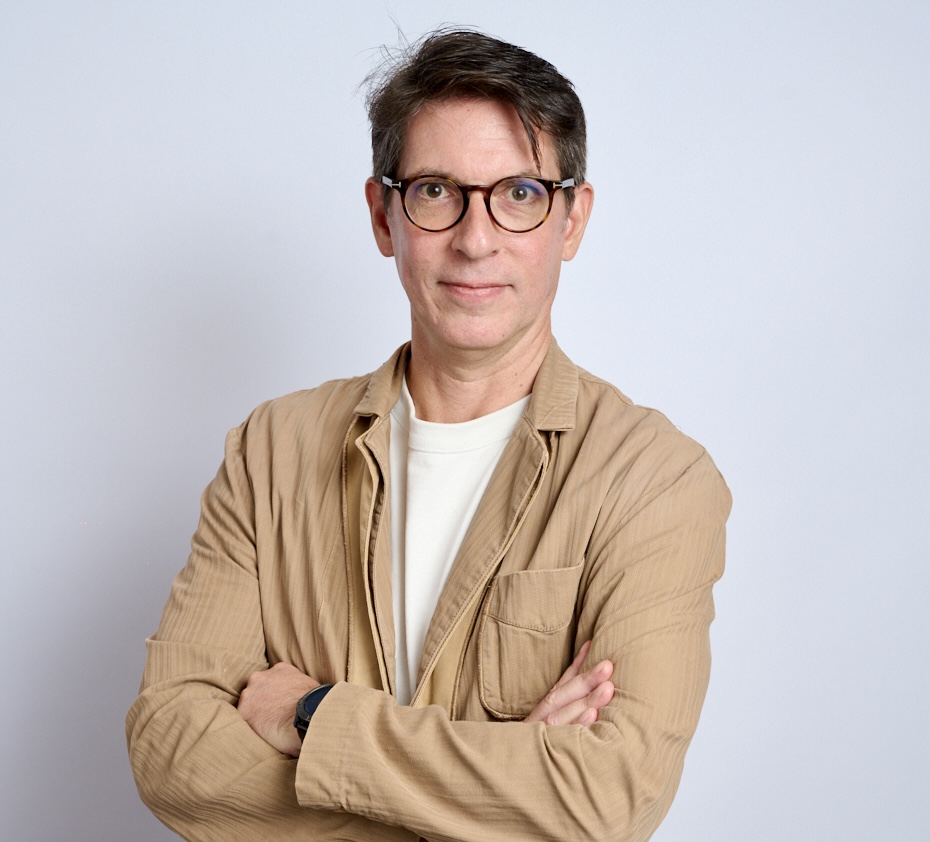
Thirty-five countries. APAC, EMEA and GCC. JV formation, M&A, and senior HR leadership at GE, Goldman Sachs, Meta and Braze — across some of the world’s most demanding operating environments.
Alf Carlesäter
Founder, GROW HR Consulting
Most leadership teams already know what is wrong. The diagnostic work is to name it precisely enough that they can act on it.
I have worked with GE, Goldman Sachs, Meta and Braze, leading HR strategy, operating model design, crisis response and international mobility governance across APAC, Europe, the Middle East and Africa.
A significant part of that background was built at scale — leading mobility programmes across more than 35 countries, managing cross-border workforce governance during periods of rapid regional expansion and structural change.
The work across these organisations was structurally consistent, even though the organisations themselves had almost nothing else in common: an industrial conglomerate, an investment bank, a social media platform, a venture-backed software company. What happens to decision-making, accountability, and governance when growth puts pressure on the architecture built for an earlier stage looks the same whether the pressure comes from a factory floor or a product roadmap, and so does what it takes to stabilise it.
The practice is diagnostic-first. Before any engagement is scoped, the work begins by identifying what is actually constraining the organisation — not what it appears to be on the surface. The practice has been operating since 2020.
I take engagements where I can see a genuine path to a better outcome for the organisation. Some briefs are declined. And when findings sit at an angle to what the brief anticipated, they are delivered that way — that is the point of the work.
The organisations where this experience was built include Mars, BP, Novartis, Société Générale, Merrill Lynch, Samsung, Citibank, Lloyds, and Motorola.
Diagnostic products include the People & Governance Diagnostic, the AI Readiness Diagnostic, and the Meridian™ Organisational Capability Diagnostic.

Author of When Systems Stretch (2025) — a study of what happens to organisations when growth outruns the architecture built to support it, and what it takes to stabilise them. The argument runs through every engagement: structure is not an HR question; it is a leadership one. Available on Amazon.
For investors, advisers, and board members, there is a dedicated page.
Recent engagements
People & Governance Diagnostic — Family-led retail business, Southeast Asia and Gulf expansion
A family-led business expanding across Southeast Asia and the Gulf, where decision ownership, cost visibility, and cross-border workforce structure had not kept pace with growth. A leadership transition was approaching, and the governance architecture had not been codified ahead of it. (People & Governance Diagnostic)
The engagement produced a ten-domain governance diagnostic, a decision-rights framework mapped across the full organisational structure, and a phased implementation roadmap for the leadership team.
The diagnostic surfaced a pattern that is common but rarely named directly: an HR function with genuine capability that had become structurally isolated — operating alongside finance and operations rather than in dialogue with them. The recommendations reframed the function’s mandate, established a shared rhythm with the CFO’s office around people cost and workforce planning, and gave the leadership team a governance architecture it could actually use ahead of the transition it was navigating.
Interim HR Director APAC — Global SaaS business, six APAC markets
A global SaaS business scaling across six APAC markets, where hiring velocity and regional expansion were creating strain on decision clarity, operating structure, and how accountability was held across HQ and region. (Fractional HR Leadership)
The engagement built a regional HR team from the ground up, established a professional operating cadence across in-region and HQ stakeholders, and improved visibility and empowerment across the business — leaving a structured and capable regional people function where none had existed at that level of structure before.
What colleagues and clients say
“His skillset in both Risk Management and Governance came through. Alf made a positive impact by translating stakeholder needs and concerns into concrete items built into the framework with the appropriate level of priority. His approach was also data driven, always supporting recommendations with analysis of past evidence and forward looking signals.”
Senior Analytics Leader · Meta
“He thrives under immense pressure and brings strong interpersonal, leadership skills, cross-cultural awareness and tact to the team. Alf can always be depended upon for strategic programme management work, making sound judgements and delivering on crisis-critical workstreams — as he consistently demonstrated throughout the management of the COVID-19 pandemic.”
Head of Crisis Management · Meta
“He was a real asset. Highly intelligent, great communicator, and related well with people across the globe. Alf thinks very strategically and instinctively knows where he needs to take his operation.”
Senior Vice President · GE
“Alf is a strategic HR thinker, questioning the status quo, that can also drive tactical operations. He built a strong team of employees and outsourced partners to deliver services to his clients. A high performer and an asset on any team.”
Direct Manager · GE
“Alf is an amazing team leader who is able to drive team dynamics, challenging and allowing team members to showcase individual strengths as well as excel as a team. As a mentor and coach, he encourages new initiatives, thinking out of the box and always exploring new ways to get things done better.”
Team Member · GE
“He is one of the few specialists I know who can really deliver the business and talent outcomes that too many just talk about. A true global mobility business partner, operating well above the technical and transactional level.”
Managing Director · Freelance Total Rewards
“Within one month, Alf had a services programme in place and had secured the first clients through his ability to successfully convince and handle client requirements. An intelligent and dedicated professional, and a great person to work with.”
Group Vice President · Crown Worldwide
Get in touch